


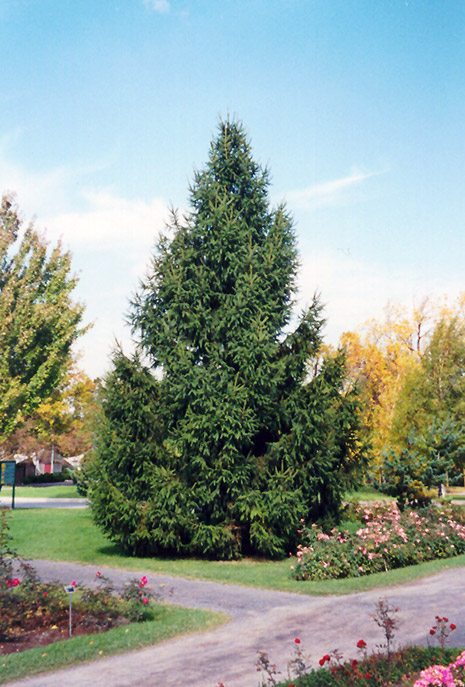
Height: 50 feet
Spread: 30 feet
Sunlight:

Hardiness Zone: 4
Other Names: Norwegian Spruce
Description:
A very popular and durable spire-shaped evergreen, excellent for articulation; interesting droopy branches when mature, rich deep green needles; tough and hardy, good for windbreaks, will grow quite large under the right conditions
Ornamental Features
Norway Spruce is primarily valued in the landscape for its distinctively pyramidal habit of growth. It has rich green evergreen foliage which emerges light green in spring. The needles remain green throughout the winter. The smooth gray bark adds an interesting dimension to the landscape.
Landscape Attributes
Norway Spruce is a dense evergreen tree with a strong central leader and a distinctive and refined pyramidal form. Its average texture blends into the landscape, but can be balanced by one or two finer or coarser trees or shrubs for an effective composition.
This is a relatively low maintenance tree. When pruning is necessary, it is recommended to only trim back the new growth of the current season, other than to remove any dieback. It is a good choice for attracting birds to your yard, but is not particularly attractive to deer who tend to leave it alone in favor of tastier treats. It has no significant negative characteristics.
Norway Spruce is recommended for the following landscape applications;
- Vertical Accent
- Windbreaks and Shelterbelts
Planting & Growing
Norway Spruce will grow to be about 50 feet tall at maturity, with a spread of 30 feet. It has a low canopy, and should not be planted underneath power lines. It grows at a medium rate, and under ideal conditions can be expected to live for 70 years or more.
This tree should only be grown in full sunlight. It does best in average to evenly moist conditions, but will not tolerate standing water. It is not particular as to soil type or pH, and is able to handle environmental salt. It is highly tolerant of urban pollution and will even thrive in inner city environments. Consider applying a thick mulch around the root zone in winter to protect it in exposed locations or colder microclimates. This species is not originally from North America.


This Plant Library is for informational purposes only. We may or may not carry the items listed. During many times of the year, we may carry many more plants in our store than are listed in the Plant Library. Please contact us directly at 303-690-4722 or visit our store for current availability and for assistance.